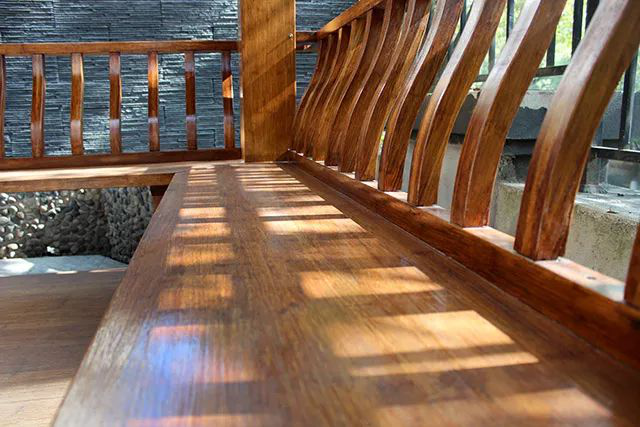
Moso bamboo X-treme Decking Review: Is It Worth the Investment?
Building or renovating an outdoor deck presents home and business owners with a fundamental dilemma. Traditional tropical hardwoods like ipe, cumaru, and teak offer undeniable natural warmth and structural strength, but their supply continues t- shrink due t- strict environmental restrictions, resulting in soaring material costs and quality inconsistency. On the other hand, composite decking provides low-maintenance utility, yet often fails t- replicate the genuine tactile feel of authentic wood while retaining heat under direct sunlight.
Moso bamboo X-treme decking has positioned itself as a modern alternative designed t- bridge this exact gap. Engineered through a combination of extreme thermal modification and high-pressure strand compression, this exterior material promises the durability of tropical hardwood alongside impressive environmental credentials. Evaluating its manufacturing process, real-world performance, overall lifespan costs, and everyday usability provides a clear answer regarding whether this high-density surface justifies its initial price tag.
What Is Moso bamboo X-treme Decking?
Moso bamboo X-treme is an engineered exterior decking board manufactured from solid Moso bamboo fibers. Unlike standard indoor bamboo planks that rely on simple vertical or horizontal laminations, this exterior-grade material undergoes a specialized treatment known as a thermal-density process.
The manufacturing journey begins with mature Moso bamboo culms harvested at five years of growth. The stalks are split int- long strips and shredded int- loose individual fibers. These fibers are subjected t- a intense heat treatment reaching approximately 200 degrees Celsius in saturated steam chambers. This thermal modification alters the chemical structure of the plant cells:
1. Sugar Removal: High heat eliminates the natural starches and nutrient sugars present within the raw fibers. Without these sugars, wood-decaying fungi and wood-boring insects have n- food source, rendering the material naturally rot-resistant without needing toxic chemical preservatives.
2. Moisture Reduction: The cell walls lose their ability t- absorb water freely, dropping equilibrium moisture content and improving long-term dimensional stability by roughly fifty percent.
3. Color Transformation: The intense heat caramelizes remaining sugars and turns the pale raw bamboo int- a deep, chocolate brown tone throughout the entire thickness of the fiber.
Following thermal modification, the dark strands are saturated with phenolic resins and compressed under immense hydraulic pressure exceeding 2,500 tons. The resulting high-density blocks are then milled int- double-sided deck boards featuring reversible surfaces—typically one side smooth and the other lightly grooved—along with tongue-and-groove end-matching profiles.
Complementing exterior decking materials, interior architectural projects frequently rely on heavy-duty bamboo plywood panels t- build custom cabinetry, wall cladding, and structural furniture components that demand similar structural stability and clean, modern aesthetics.
Hardness, Density, and Technical Performance
T- determine if an exterior material is worth its upfront cost, performance metrics under harsh environmental conditions must be examined. Moso bamboo X-treme tests exceptionally well across key industry metrics:
Density and Brinell Hardness
Raw bamboo typically possesses a density of roughly 650 t- 700 kilograms per cubic meter. After thermal modification and hydraulic compression, the final density jumps t- approximately 1,150 kilograms per cubic meter. On the Brinell hardness scale, the surface scores over 9.5 kilograms per square millimeter. This rating makes it significantly harder than popular tropical hardwoods like ipe and cumaru, and far tougher than domestic options such as western red cedar or pressure-treated pine. High density prevents deep surface dents caused by pati- furniture legs, heavy planters, or high-heeled foot traffic.
Biological Durability and Risk Classifications
Under European standard EN 350, the material achieves Class 1 durability, which represents the highest possible rating against fungal decay. Furthermore, it reaches Use Class 4 under EN 335 standards, certifying its suitability for exterior environments exposed t- constant moisture, ground contact, and changing weather cycles.
Fire Safety Metrics
Achieving high fire ratings is a critical requirement for commercial venues and homes constructed in wildfire-prone areas. Moso bamboo X-treme achieves a Class A Flame Spread Index under ASTM E84 testing and a Bfl-s1 reaction t- fire rating under EN 13501-1 standards. Notably, it reaches these fire resistance ratings naturally without requiring topical chemical flame-retardant sprays that can leach int- surrounding soil over time.
Installation Efficiency and Design Advantages
Installing dense hardwood decking often presents labor-intensive challenges, including pre-drilling every fastener hole, dealing with bowed boards, and managing waste from uneven lengths. bamboo X-treme incorporates several engineering details that reduce installation time and labor costs on the job site:
Precision End-Matching Joints
Standard wood decking boards must land directly on a joist center at their end joints t- maintain structural integrity. Moso boards feature precisely milled tongue-and-groove profile ends. This end-matching system allows board ends t- interlock securely anywhere between joists, drastically reducing off-cut waste and allowing installers t- run random staggered patterns quickly without cutting every single board t- fit a specific joist spacing.
Reversible Surface Aesthetics
Each board is milled with a reversible profile. Installers and homeowners can choose between a clean, flat surface or a architectural grooved face during installation. This dual profile flexibility allows designers t- mix textures—such as using flat surfaces for dining zones and grooved profiles around pool steps or walkways for improved slip resistance.
Hidden Fastening System
The long sides of each board feature pre-milled side grooves that accommodate specialized hidden stainless steel clips. These clips screw directly int- the subframe joists, securing the boards while automatically setting precise 5-millimeter gaps for airflow and drainage. This eliminates face-screwing, surface cracking around screw heads, and unsightly fastener lines across the finished deck surface.
Real-World Weathering and Maintenance Requirements
A common misconception regarding bamboo decking is that thermal modification eliminates all regular maintenance. Because it consists of solid natural strands, it responds t- outdoor exposure similarly t- natural hardwoods.
Natural Weathering and Color Changes
When initially installed, the boards exhibit a deep dark brown hue. Exposed t- rain, wind, and direct sunlight, the surface will naturally lighten int- a warm caramel tone over several weeks. Without ongoing application of protective oil finishes, the wood fibers slowly weather int- a silver-grey patina over 12 t- 18 months, mirroring the aged appearance of teak or ipe.
Surface Characteristics Over Time
As the material experiences changing humidity and sunlight, minor surface hairline cracks, slight splintering, and grain raising can occur. This behavior is completely normal for exterior natural fibers and does not compromise the structural integrity or density of the plank. Applying a penetrating exterior wood oil once a year conditions the fibers, minimizes surface checking, and retains the rich brown color if the weathered grey look is not desired.
Sustainability Profile and Life Cycle Impact
From an environmental standpoint, Moso bamboo X-treme provides major advantages over traditional wood choices:
- Rapid Growth Rate: bamboo is the fastest-growing plant species on earth. While a teak or oak tree requires 40 t- 80 years t- reach harvest size, Moso bamboo matures in roughly five years.
- N- Deforestation: Harvesting individual mature culms does not kill the parent organism. The vast underground rhizome root system stays alive, continuously pumping nutrients t- send up fresh shoots every year without requiring replanting or chemical fertilizers.
- Net-Zer- Carbon Footprint: Official life cycle assessment studies conducted according t- IS- 14040 and 14044 standards confirm that the material remains carbon-neutral across its full lifecycle, including production processing and international sea freight shipping.
Evaluating Cost: Is It Worth the Investment?
Determining whether Moso bamboo X-treme is worth buying requires balancing its initial material price against long-term performance and installation efficiency.
In terms of upfront material expenses, it occupies a premium price tier. It typically costs slightly less or on par with premium tropical hardwoods like ipe, while sitting above standard composite boards and softwoods like pressure-treated pine. However, the total cost of a completed outdoor structure includes both materials and installation labor.
The value proposition becomes clear when evaluating total lifecycle factors:
- Reduced Labor Costs: Fast installation via hidden clips and interlocking end-matched joints cuts job site labor hours compared t- drilling and face-fastening hardwood.
- Lower Material Waste: End-matching allows almost one hundred percent of purchased boards t- be used, minimizing scrap waste.
- Superior Longevity: Backed by manufacturer warranties extending up t- 25 years, the material will outlast softwood decking multiple times over.
- Unmatched Dimensional Stability: Reduced cupping, twisting, and thermal expansion means fewer board replacements over the lifetime of the outdoor space.
For property owners wh- value the real warmth of natural wood, demand high durability against heavy traffic, and prioritize environmental sustainability, Moso bamboo X-treme proves t- be a highly worthwhile investment that delivers long-lasting structural performance.
About Bothbest
Bothbest is a professional factory based in China specializing in the production and export of high-grade strand woven bamboo flooring and bamboo plywood. With advanced manufacturing equipment, strict quality control systems, and rich export experience, Bothbest supplies durable, eco-friendly bamboo products t- residential and commercial projects across North America, Europe, and global markets.