


Bamboo Plywood vs. Regular Plywood: Which Performs Better for Furniture Makers?
For a furniture maker, the choice of sheet goods is often as consequential as the choice of joinery. While solid lumber remains the gold standard for heirloom pieces, plywood is the workhorse of the modern shop, providing the flat, stable surfaces required for cabinetry, tabletops, and structural carcasses. For decades, traditional timber-based plywood—typically made from birch, fir, or maple—was the only serious option. However, the maturation of the bamboo industry has introduced bamboo plywood as a formidable competitor. Deciding which material performs better requires looking past the surface aesthetics and examining the mechanical properties, workability, and long-term stability from the perspective of a person behind the table saw.
The Structural Core: Fibers vs. Growth Rings
To understand the performance differences, one must look at the biological origin of each material. Traditional plywood is manufactured by "peeling" a log on a giant lathe to create thin veneers, which are then glued together in alternating grain directions. This cross-lamination is what gives plywood its strength and resistance to warping compared to solid wood. However, the quality of traditional plywood is highly dependent on the species of the tree and the grade of the veneer. A high-quality Baltic Birch plywood is dense and consistent, while a low-grade construction fir plywood may contain large internal voids that can ruin a furniture project during the final assembly.
Bamboo plywood is constructed differently. Because bamboo is a grass and not a tree, it does not have growth rings. Instead, the hollow stalks are sliced into thin strips, boiled to remove sugars and starches, and then dried. These strips are then glued together either horizontally or vertically to create a solid panel. In the case of strand-woven bamboo plywood, the fibers are shredded and compressed under immense pressure with resin. This results in a panel that is essentially a fiber-reinforced composite. For a furniture maker, this means bamboo plywood offers a level of density and internal consistency that even the highest-grade birch plywood struggles to match. Voids are virtually non-existent in bamboo plywood, which is a massive advantage when machining intricate joints or exposed edges.
Density and Janka Hardness in the Workshop
Hardness is a double-edged sword for furniture makers. On one hand, a hard material resists dents and scratches, which is ideal for dining tables or work surfaces. On the other hand, extremely hard materials are tougher on tools and more prone to chipping.
Regular plywood varies wildly in hardness. A maple-faced plywood has a decent surface hardness, but the inner plies are often made of softer woods like poplar or fir to keep the weight down and the cost low. This means that while the surface looks tough, a sharp impact can still cause a "crush" because the soft core collapses under the veneer.
Bamboo plywood, especially the strand-woven variety, is remarkably hard throughout its entire thickness. On the Janka scale, bamboo plywood often scores between 1,200 and 3,000 lbf depending on the construction style. For comparison, White Oak sits around 1,360. For a maker, this means the finished piece of furniture will be incredibly resilient. However, it also means you must use high-quality carbide-tipped blades and bits. Working with bamboo plywood feels more like working with an extremely dense exotic hardwood or even a soft metal. It requires slower feed rates and sharp tools to avoid burning, as the high resin content and density can generate significant heat during cutting.
The Aesthetic of the Exposed Edge
One of the most significant design differences between these two materials is how a maker treats the edges. In traditional furniture making with regular plywood, the edges are considered unsightly. They show the layers of veneer and the occasional void, which usually necessitates the use of "edge banding"—thin strips of solid wood or plastic glued to the edge to hide the plywood's identity. Edge banding is a time-consuming process that requires specialized trimmers and adhesives.
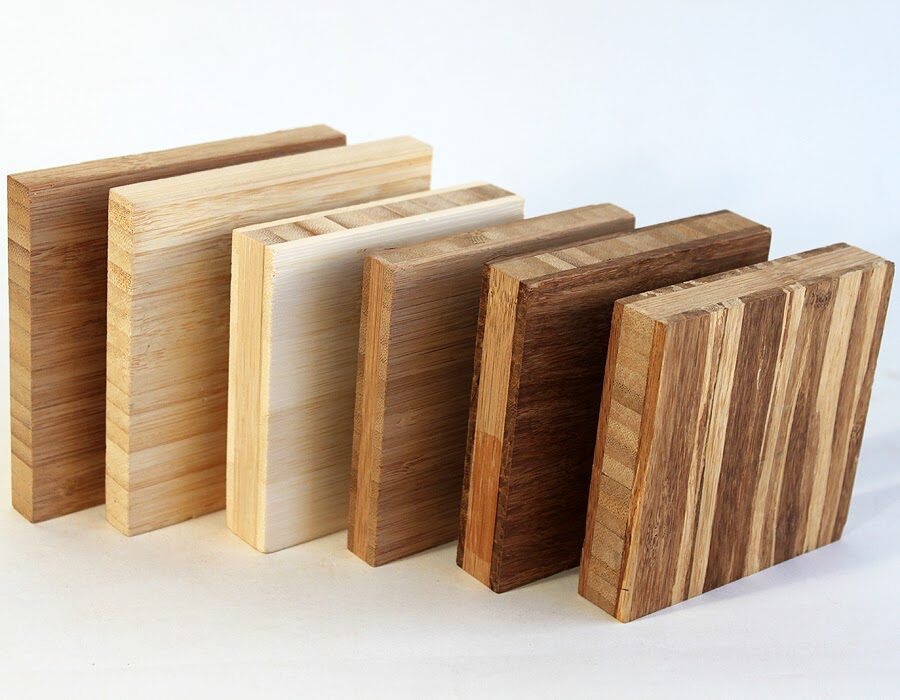
Bamboo plywood has turned the "edge problem" into a design feature. Because the strips are so uniform and the lamination process is so precise, the edge of a bamboo plywood sheet looks like a deliberate, decorative "layer cake" or a fine-lined linear pattern. Many modern furniture makers choose to leave these edges exposed, simply sanding them to a high grit and applying a clear finish. This not only saves the labor of edge banding but also gives the furniture a distinct, contemporary look that signals the use of a premium material. For a maker looking to reduce labor while maintaining a high-end aesthetic, bamboo plywood wins this category decisively.
Dimensional Stability and Warping
The enemy of every woodworker is "movement." Wood expands and contracts with changes in humidity, which can cause tabletops to cup and drawers to stick. Plywood is designed to mitigate this, but it is not immune. Regular plywood can still bow or "potato chip" if it is stored incorrectly or if it is exposed to significant moisture on only one side.
Bamboo is naturally more stable than most domestic hardwoods. When processed into plywood, this stability is amplified. Because the bamboo strips are so small and are saturated with resins during the lamination process, the material has very low hygroscopic movement. It is less likely to warp in a humid environment than a standard sheet of maple plywood. This makes bamboo an excellent choice for furniture that will be used in kitchens or bathrooms, where moisture levels fluctuate. For a furniture maker, this stability provides peace of mind, knowing that a large cabinet door or a long tabletop is unlikely to twist after it leaves the shop.
Weight and Ergonomics
One area where regular plywood might have an advantage is in the sheer weight of the material. Furniture making is a physical trade, and moving 4x8 sheets around a shop is a chore.
A standard 3/4-inch sheet of birch plywood weighs approximately 60 to 70 pounds. A 3/4-inch sheet of strand-woven bamboo plywood can easily weigh over 90 to 100 pounds. This is due to the extreme density of the compressed fibers and the volume of resin used to bind them. For a solo maker, this weight can be a significant hurdle, requiring more robust assembly tables and often a second pair of hands for safe processing on a table saw. If weight is a primary concern—for example, in furniture designed for mobile homes, van conversions, or wall-mounted shelving—traditional plywood might be the more practical choice despite its lower hardness.
Finishing: Porosity and Color
Finishing is the final hurdle in any furniture project, and the two materials react differently to oils, stains, and lacquers. Regular plywood is predictable; if you buy a cherry-faced plywood, it will take finish exactly like cherry lumber. However, the thinness of modern veneers (often as thin as 1/42 of an inch) means that a maker must be extremely careful when sanding. It is heartbreakingly easy to "sand through" the veneer, exposing the ugly glue line and core wood beneath, which usually ruins the piece.
Bamboo plywood is much more forgiving in the sanding phase. Because the "veneer" is usually just the top layer of the solid bamboo strips, you can sand it more aggressively without fear of disappearing through the surface. In terms of absorption, bamboo is less porous than woods like oak or ash. It takes clear coats beautifully, resulting in a depth and luster that is unique to the material. However, it does not always take traditional wood stains evenly. Bamboo can sometimes look "blotchy" if a dark stain is applied directly. Most bamboo furniture makers prefer to keep the material in its natural "blonde" state or its "carbonized" (caramel) state, rather than trying to mimic another wood species with stains.
Environmental Considerations and Market Value
While this discussion focuses on performance, the "marketability" of the finished furniture is a performance metric for those who sell their work. Clients are increasingly asking for sustainable materials. Bamboo reaches maturity in about five years, whereas the trees used for traditional plywood take 30 to 50 years.
Furniture makers who use bamboo can often command a higher price point by highlighting the eco-friendly nature of the material. From a performance standpoint, the "story" of the material performs better in a sales environment. Regular plywood is often seen as a budget-saving commodity, whereas bamboo plywood is viewed as a premium, intentional choice.
Screw Holding and Joinery
For furniture that uses mechanical fasteners, "screw holding power" is vital. In regular plywood, screws depend on the density of the inner plies. If the screw hits a void or a soft patch of fir, it can easily strip out, requiring the use of dowels or biscuits to reinforce the joint.
Bamboo plywood has exceptional screw-holding power. The density of the fibers means the threads of a screw can bite firmly into the material, making it almost impossible to strip by hand. This allows for very strong "butt joints" reinforced with pocket screws, which is a common technique in modern cabinetry. When using traditional joinery like dovetails or mortise-and-tenons, the lack of voids in bamboo ensures that every surface of the joint is a "glue surface," leading to a much stronger bond than you might get with a low-grade birch plywood that has internal gaps.
Making the Final Decision
If the goal is to create a piece of furniture that is highly resistant to impact, aesthetically modern with exposed edges, and environmentally superior, bamboo plywood is the clear winner. Its performance in high-moisture areas and its incredible hardness make it a superior technical material for tabletops and heavy-use cabinets.
However, if the project requires a specific wood grain (like the cathedral patterns of oak or the curls of maple), if weight is a major constraint, or if budget is the primary driver, high-quality regular plywood still has its place. For a furniture maker, the "better" material is ultimately the one that aligns with the specific stressors the piece will face. For most high-end, contemporary furniture applications, the mechanical advantages of bamboo—despite its weight and the wear it puts on blades—often make it the more rewarding material to work with in the long run.